Across its eight generations of mainline games, thePokemonfranchise has introduced plenty of interesting moves that the titular creatures can use in battle. Some are straightforward, simple attacks; others provide buffs or debuffs. Some moves change the conditions of the battle, and still others combine several effects at once.
RELATED:Pokemon: Everything You Need To Know About Confusion (Status Condition)
Among these attacks, though, some strike players as strange in terms of either their concept or effects. Some are pointless and lead players to wonder why they exist in the first place; others are quite useful, but their descriptions lead to questions. The moves below are perfect examples ofPokemon’s weirder side.
8Forest’s Curse
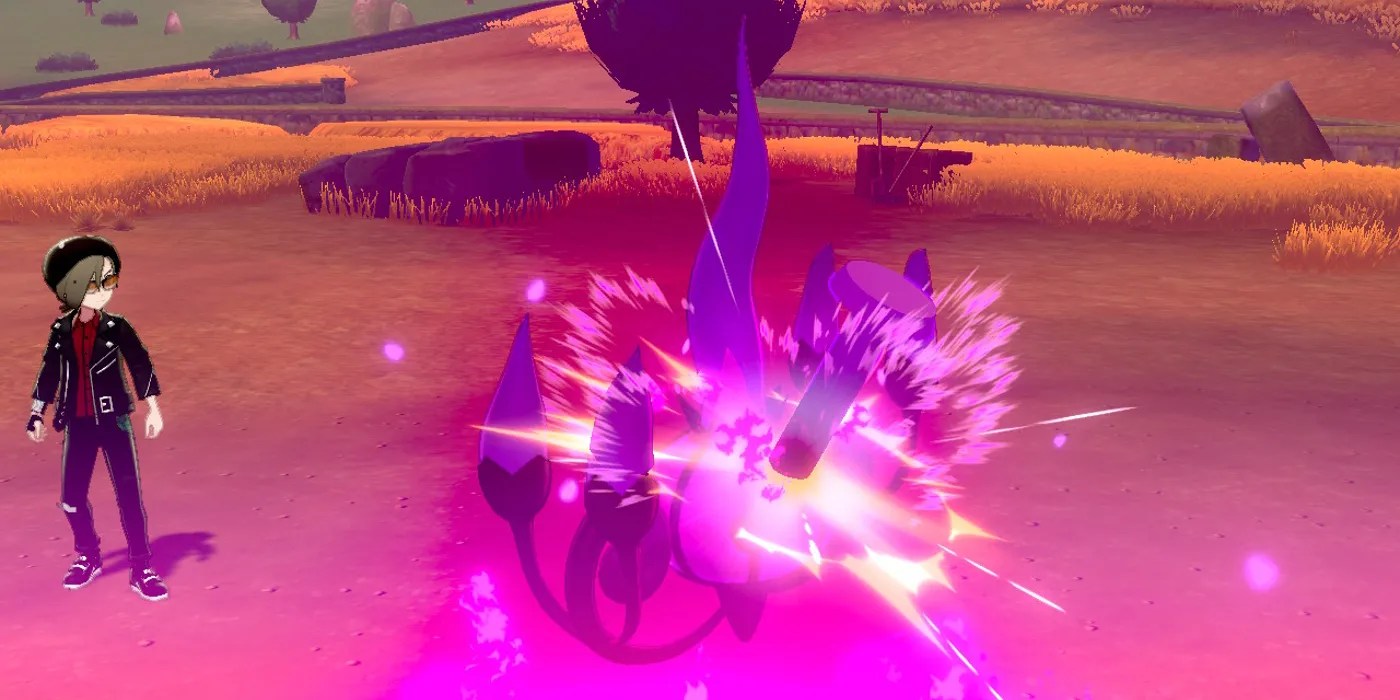
There are a fair number of moves that change a target’s type, such as Soak or Trick-or Treat. Forest’s Curseadds the Grass typing to the target’s current type, which can definitely be useful in some situations. Altering an opponent’s type can create type advantages that did not exist before.
However, Forest’s Curse earns a spot on this list because it is the signature move of Phantump and Trevenant, who have very few moves that are super-effective against Grass-types. Trevenant only learns threePoison-type attacks, all of which are TR’s in Gen VIII. In most cases, adding Grass to an opponent’s type won’t do much to help this Pokemon.
7Teatime
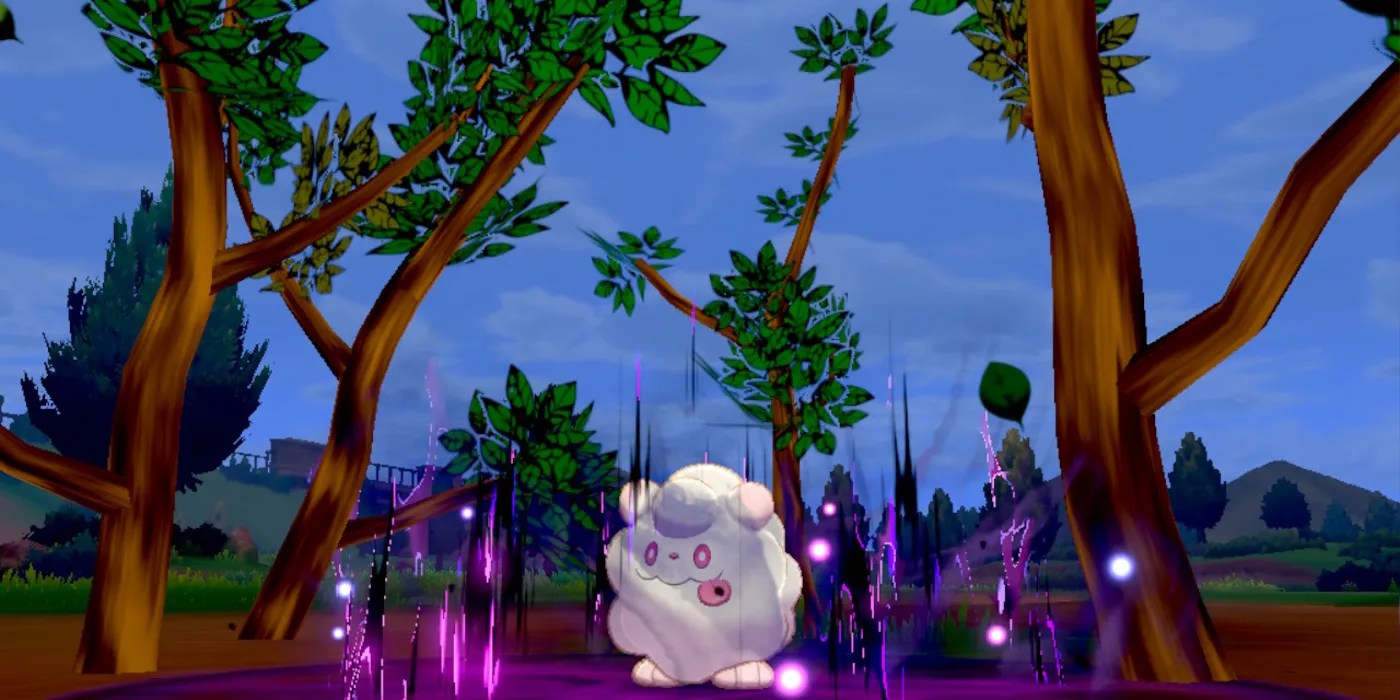
A Normal-type moveintroduced in Gen VIII, Teatime is the fitting signature move of Sinistea and Polteageist. This moveforces every Pokemon on the battlefield to eat its held Berry.The goal is to force an opponent to waste its Berry’s effects; for example, eating a Lum berry when it is not affected by a status condition.
Generally speaking, it’s not an incredibly useful move. Firstly, it will fail if no Pokemon on the battlefield is holding a Berry — and players generally have no way to know if their enemy Pokemon is holding one. Ultimately, most players aren’t willing to waste a turn on Teatime for the slim chance of taking away a small buff their opponent may or may not have.

6Dragon Darts
Dragapult’s signatureDragon-type moveraises a lot of questions. According to the move’s description,the user hurls two Dreepy at its foe to harm them— essentially, Dragapult uses its young as sentient projectiles.
RELATED:Pokemon: Everything You Need To Know About PP
There’s no question that being struck with two tiny dragon ghosts would deal damage; instead this move’s oddity has more to do with logistics. For starters, the move has 10 PP — do the Dreepy return to Dragapult after being launched, or does Dragapult have a huge supply of them? If a trainer has a Dragapult, is it in fact storing multiple Pokemon in a single Pokeball? At the very least, Pokemon lore states that Dreepy seem to enjoy being launched at high speeds — it’s a relief that they’re not damaged in the process.
5Synchronoise
Introduced in Gen V, this Psychic-type movedamages all adjacent Pokemon with whom it shares at least one type.The concept is interesting, but somewhat confusing. What is it aboutthe psychic power of this movethat only allows it to damage same-typed Pokemon?
What’s more, this move is not typically very useful in battle, since the Psychic-type resists itself. Some non-Psychic-type Pokemon can use this move, such as Hoothoot. Still, this move might have proved more effective as a Ghost-type or even a Normal-type attack.

4Frustration
Considering thebenefits of high friendshipin mostPokemongames, many trainers are eager to build a positive relationship with the members of their team. However, this Normal-type attack from Gen II actively discourages that: itincreases in power the lower the user’s Friendship with its trainer.
Lowering friendship is often more difficult than raising it — not to mention, most players simply don’t enjoy the idea that their Pokemon dislikes them. Thegames emphasize the importance of loving and cherishing one’s Pokemon companions, so it feels odd to include a move that benefits from negative friendship levels.

3Psywave
The damage of this first-gen Psychic-type move iscalculated based on a variable chosen at random.It ignores type weakness and advantage, to deal between 1 and 150 HP of damage. The calculation is as follows:
(user’s level * (r +50)) ÷ 100

The calculation does take the user’s level into account, ensuring that higher-level Pokemon produce a more damaging Psywave. The variabler, however, is a random number between 0 and 100; thus,this attack’s power still varies wildly.Such an unpredictable move is frustrating and often fairly useless to most Pokemon players.
2Curse
Curse is one of the most unique moves in all the Pokemon games — and works in one of the strangest ways. For every type except Ghost, a Pokemon using Curse willlower its own Speed and raise its own Attack and Defenseby one stage each. Meanwhile,Ghost-typeswill lose half of their max HP, and in turn cause their opponent to lose 25% of its max HP each turn.
RELATED:Pokemon: Everything You Need To Know About EV Training
Reportedly, this difference in effect is a reflection of the move’s Japanese name, which can mean either “curse” or “slow” — hence, the speed drop for non-Ghost types. This ambiguity was lost in translation, leading to some confusion over the move for non-Japanese-speaking players.
1Lick
The concept ofcausing damage by lickingis a bit strange in itself, but this move’s Ghost typing makes it even stranger. There’s nothing inherently ghostly about a lick. It makes some sense considering the moveoriginated with Gastly’s line— but if the developers were aiming to give this attack a STAB, Poison might have fit better, considering the ick factor of being covered in saliva. What’s more, Lick wasn’t even Gastly’s line’s signature move — Jynx learned this attack as well, and after Gen I, more and more Pokemon added it to their movepool.
Even more odd is this attack’s secondary effect, a30% chance to paralyze the target.How does a lick paralyze its foe? Does ghostly spit have immobilizing effects? Is it the sheer horror of being bashed by a giant tongue?Pokemonplayers may never know.