Summary
While names such asMobile Suit Gundam, Neon Genesis Evangelion, andMacrosshave become household names in the mecha anime genre, the evolution of the mecha anime goes way beyond what the three IPs had offered since their initial release. However, an upcoming 2023 anime adaptation of the mangaPlutomay provide a unique take on the mecha genre, this time starring a robot detective who attempts to solve a string of human and robot deaths.
DespitePluto’s unique approach in its mystery subtext, certain robots also contributed to subtle and significant aspects of mecha designs that have become popular today. For the uninitiated, which robots made a vast difference in how the mecha anime genre looks today?

10Astro Boy (1963)
With the advent of anime in post-WW2 Japan, none perhaps embodied the philosophies of peace and overcoming differences thanAstro Boy. While more of an android in modern nomenclature,the 1963Astro Boyanimepresented trends that would slowly evolve into mecha tropes enjoyed today. The core design element of it all is cheerful Astro Boy continuing to embody hope against all odds, using a wide variety of armaments to solve problems in every episode.
Astro Boy’s child-like form and prominent boots would become a staple design inspiration for the likes of Mega Man. However, modern mecha could trace its staple design components such as a prominent headpiece, waist protection, and unique footing to Astro Boy’s signature protective briefs and red boots.

9Tetsujin 28 (1963)
WhileAstro Boyis often credited as the progenitor of the mecha genre,Tetsujin 28is likely the show to establish its roots. Set in post-WW2 Japan,Tetsujin 28follows the adventures of the eponymous robot, a powerful war machine Japan created in WW2 to fight the Allies but was never used. However, the machine is brought to life by 10-year-genius Shotaro Kaneda who uses it to fight Professor Franken Shutain’s evil robots.
While technically remote-controlled by Shotaro,Tetsujin 28starts the trend of giant mechabeing used to fight equally-giant threats. The predominant grays and blue decals of Tetsujin 28 don’t make it an appealing robot by today’s standards but has garnered massive appeal from kids back in the day.

8Mazinger Z (1972)
It wasMazinger Zthat popularized the “monsters of the week” as the go-to formula for mecha anime, jumpstarting what’s known as the Super Robot subgenre. Bolder designs and more vibrant colors became synonymous with themecha designs ofMazinger Z’s successors, denoting a desire to appeal to kids as robot toys have also become more popular.
In the relatively novel time of color television,Mazinger Zmakes use of a bold red-white-black color scheme to grab the center of attention in painted backdrops. Its spiked helm design and angular motif became the basis of other mecha designs of other franchises post-series.

7Getter Robo (1974)
While both theSuper SentaiandPower Rangersfranchises would bring the idea of combining robots to the mainstream, it’sGetter Robothat started the trend. In a version of Earth attacked by humanoids of the Dinosaur Empire, Prof. Saotome is forced to activate his Getter Robo space exploration project to be used as a means to protect the planet instead. Thanks to three heroic teenage pilots, Getter Robot’s three jet components can be combined into separate robots to fight the alien threat.
Such was thecritical acclaim forGetter Roboat the timethat it spawned a franchise featuring different Getter Teams and iterations of the eponymous robot. While not as acclaimed asGundamtoday,Getter Robohas influenced other hit-makers in the mecha genre such asGurren Lagann.

6Mobile Suit Gundam (1979)
InMobile Suit Gundam, Amuro Ray is thrust into a war between the Earth Federation and the Principality of Zeon. He’s the chosen pilot of the RX-78-2 Gundam, the Earth Federation’s ace in the hole against Zeon’s more advanced Zaku units. While the biggestcontribution of theGundamfranchisewas starting the Real Robot subgenre of more in-depth narratives, it’s the visual “pop” of the white-blue-red RX-78-2 Gundam that defined the franchise’s iconic aesthetic.
The approach to a more realistic design of the RX-78-2 also incorporated iconic stylistic components such as white fins, a face plate, waist armor, and heeled feet that all Gundam-named mecha will eventually share.

5Super Dimension Fortress Macross (1982)
Among the greatest of the concepts created by prolific mecha designer Shoji Kawamori was theSuper Dimension Fortress Macross, the anime that popularized the concept of transforming mecha. Building upon hisDiacloneline of transforming vehicles (which eventually got adapted into theTransformers),Super Dimension Fortress Macrossand its eventualMacrossseriestold the familiar mecha war narrative from the perspective of civilians.
Concepts-wise,Macrossalso debuted the first “virtual idol” in the form of the singer Lynn Minmay, the main romantic interest of the anime’s protagonist. In terms of mecha,Macrosspaved the way for realistic transforming robots, with the titular SDF-1 Macross being an alternating capital ship with a mecha attack mode. Such a concept would extend to bothMacrossanime and games, where fighter jets have alternate mecha modes for extra firepower.

4Neon Genesis Evangelion (1995)
Perhaps more of an introspection of anime culture than just being a subversion of the mecha genre,Neon Genesis Evangelionis a coming-of-age story involving a reluctant MC saving the world. However, while its sleeker Evangelion mecha facilitates action scenes loved by kids, its overarching narrative has existential undertones appreciated by analytical adults.
Hideaki Anno’s masterpiece is a jewel to behold in design alone, with the slouched Evangelion mecha being a departure from the heroic depictions of mecha. TheEVA’s stylistic demonic oni-inspired maskand emphasis on eccentric curves fit the series’ pursuit of visual symbolism, especially when the series enemies take the form of monstrous aliens called Angels

3Mobile Suit Gundam Wing (1995)
DespiteMobile Suit Gundam Wingbeing the sixth main installment of the franchise, its status as the firstGundamanime brought to the States has launchedGundamto a global mainstream audience. Its story of five teenagers piloting various Gundam to fight an oppressive global power resonated with younger viewers,giving everyone a Gundam and a pilot to admire.
Despite Gundam Wing’s designs sharing similarities to the OG mecha, it’s the first of the series to include six Gundams with straying designs. Aside from keeping the main aesthetic (fins, face plate, skirt), showcasing unique elements such as wings (Wing), chain guns (Heavy Arms), and a scythe (Deathscythe) will start a franchise trend of supporting Gundams accompanying a white-blue-red protagonist.
2Code Geass (2006)
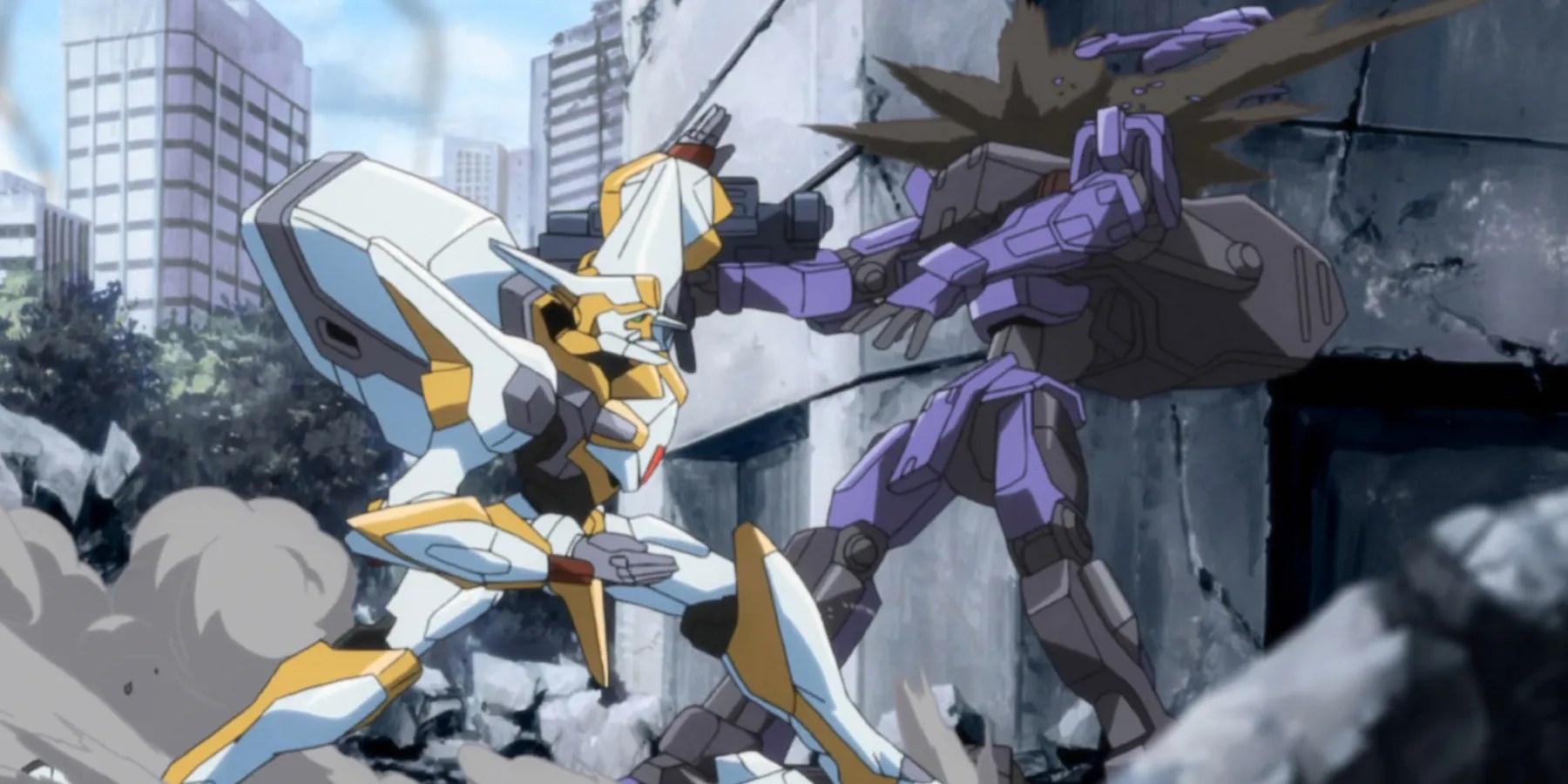
Clamp’s character designs dominatingCode Geassis a hint to the series appealing to multiple sectors of anime culture, with the 2006 anime uniting mecha fans with action-packed shonen enthusiasts, romance lovers, and fans eager for a story of struggling against all odds. Starringexiled prince Lelouch vi Britannia, his access to the Power of Absolute Obedience motivates him to start an all-out rebellion against his Emperor father.
On top of the mystical Geass, mecha battles take much of the highlight in the anime series. Knightmare Frames break from giant robot stereotypes as they instead replace conventional tanks, with a unique wheel feature that facilitates grounded yet action-packed battles. While much ofCode Geassis Lelouch’s story, the development of rivaling Knightmares Lancelot and Guren becomes a thrilling point of progression for mecha fans.

1Gurren Lagann (2007)
The loud and vibrant aesthetic ofGurren Lagannadds a distinct visual style that easily sets it apart from the dreary “realness” ofGundamand mecha concepts at the time. Its stylistic themes and a flair for artful exaggeration are seen especially in the way visuals evolve across the story. At first,Gurren Laganninvolves settlers of underground villages who usethe mecha called Lagannto fight their way to the surface in a bid to free Earth from the Spiral King, Lordgenome.
However, as protagonists Simon, Kamina, and Yoko Littner grow as characters, so too did the Lagann and its mecha fights evolve into increasing levels of chaos, edginess, and style. The equal emphasis on Lagann and the way characters get involved in the story has proven the mecha genre’s potential to appeal to a mainstream audience.
MORE:Gundam Evolution: The Best Gundams Across The Franchise That Needs To Be Added
